Rising Rajasthan Summit 2025: Advancing Skill Education for India’s Future Workforce
India’s long-term economic and technological growth depends significantly on the development of a skilled, future-ready workforce. Skill education has therefore become a critical component of the national education ecosystem, bridging the gap between academic learning and industry requirements.
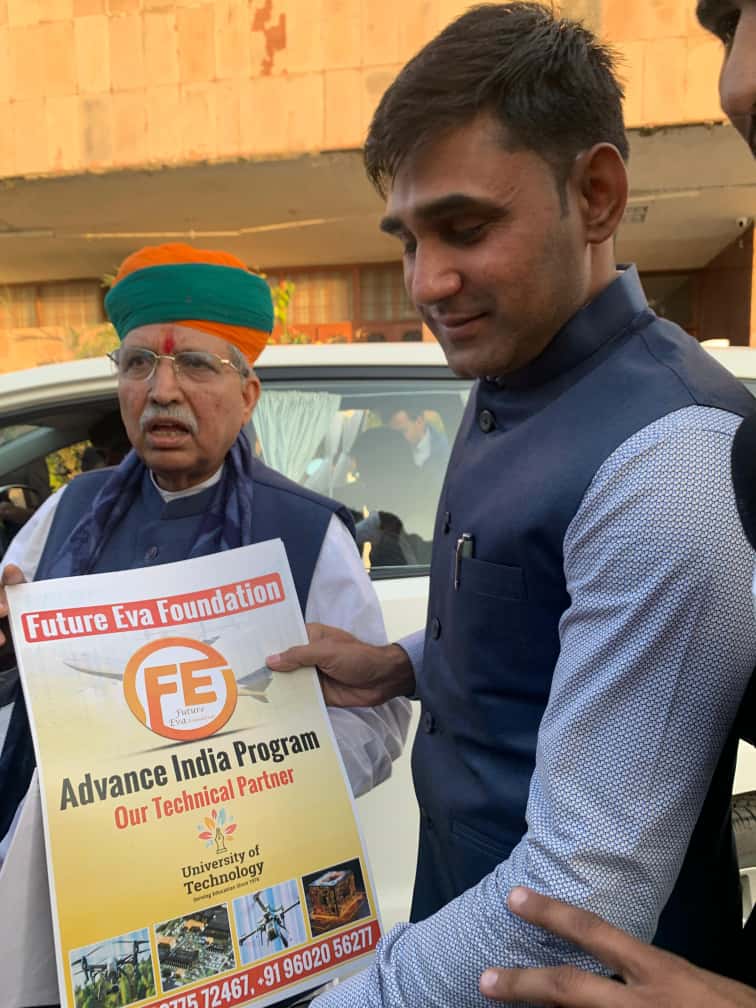
At the Rising Rajasthan Summit 2025, a Memorandum of Understanding (MoU) was signed in the domain of Education and Skill Development, with a focused objective of strengthening advanced technical skills among students and young learners.
Strategic Objective
The primary objective of this collaboration is to design and implement structured skill-development programs aligned with emerging technologies. The initiative aims to equip learners with practical, application-oriented skills and to foster technical competence, innovation capability, and problem-solving aptitude.
Focus Areas of Skill Development
Drone Technology
Drone technology is increasingly being adopted across sectors such as agriculture, infrastructure, logistics, disaster management, and surveillance. Under this initiative, learners will be trained in:
Fundamentals of drone systems
Operational and safety protocols
Maintenance and troubleshooting
Practical applications across industries
The program is structured to progress from introductory concepts to advanced operational competencies.
3D Designing and 3D Printing
3D design and additive manufacturing are transforming product development and manufacturing processes. Training in this area will include:
Computer-aided 3D design
Prototyping methodologies
Design validation and testing
Application-based manufacturing concepts
This skill area encourages innovation through hands-on design and fabrication.
Aeromodelling
Aeromodelling provides a strong foundation in engineering principles by combining theory with practical experimentation. The program supports the development of:
Applied physics and engineering fundamentals
Design thinking and structural analysis
Analytical reasoning and problem solving
It serves as an effective introduction to aerospace and mechanical engineering concepts.
Electronic Skills
Electronics form the core of modern technological systems. The electronic skills program focuses on:
Basic electronics and circuit design
Sensors and embedded systems
Microcontrollers and control systems
Robotics and automation fundamentals
Introductory Internet of Things (IoT) applications
These competencies enable learners to understand, design, and build functional electronic systems.
Skill Education Framework: From Foundation to Advanced Levels
The initiative follows a structured, multi-level learning framework to ensure progressive skill acquisition.
Foundation Level
Conceptual understanding through practical demonstrations
Activity-based and experiential learning
Early exposure to engineering and technology fundamentals
Intermediate Level
Modular skill-based curriculum
Project-oriented learning approach
Integration of electronics, design, and applied technologies
Advanced Level
Industry-aligned certification programs
Complex project development and prototyping
Exposure to innovation, research, and applied engineering practices
Career readiness and technical specialization
This progressive framework ensures continuity in learning and measurable skill advancement.
Contribution to Workforce Development
By introducing structured training in drone technology, electronics, 3D design, and aeromodelling, this initiative contributes to:
Development of industry-relevant technical skills
Enhancement of employability and technical proficiency
Promotion of innovation and applied learning within the education system
The approach emphasizes practical competence and long-term workforce readiness.
Conclusion
The MoU signed at the Rising Rajasthan Summit 2025 represents a strategic collaboration aimed at strengthening skill education through structured, technology-driven learning programs. By focusing on emerging technical domains and a progressive learning model, the initiative seeks to prepare students for evolving industry demands and technological advancements.
This collaboration reflects a sustained commitment to building a competent, skilled, and future-ready workforce through education and innovation.